
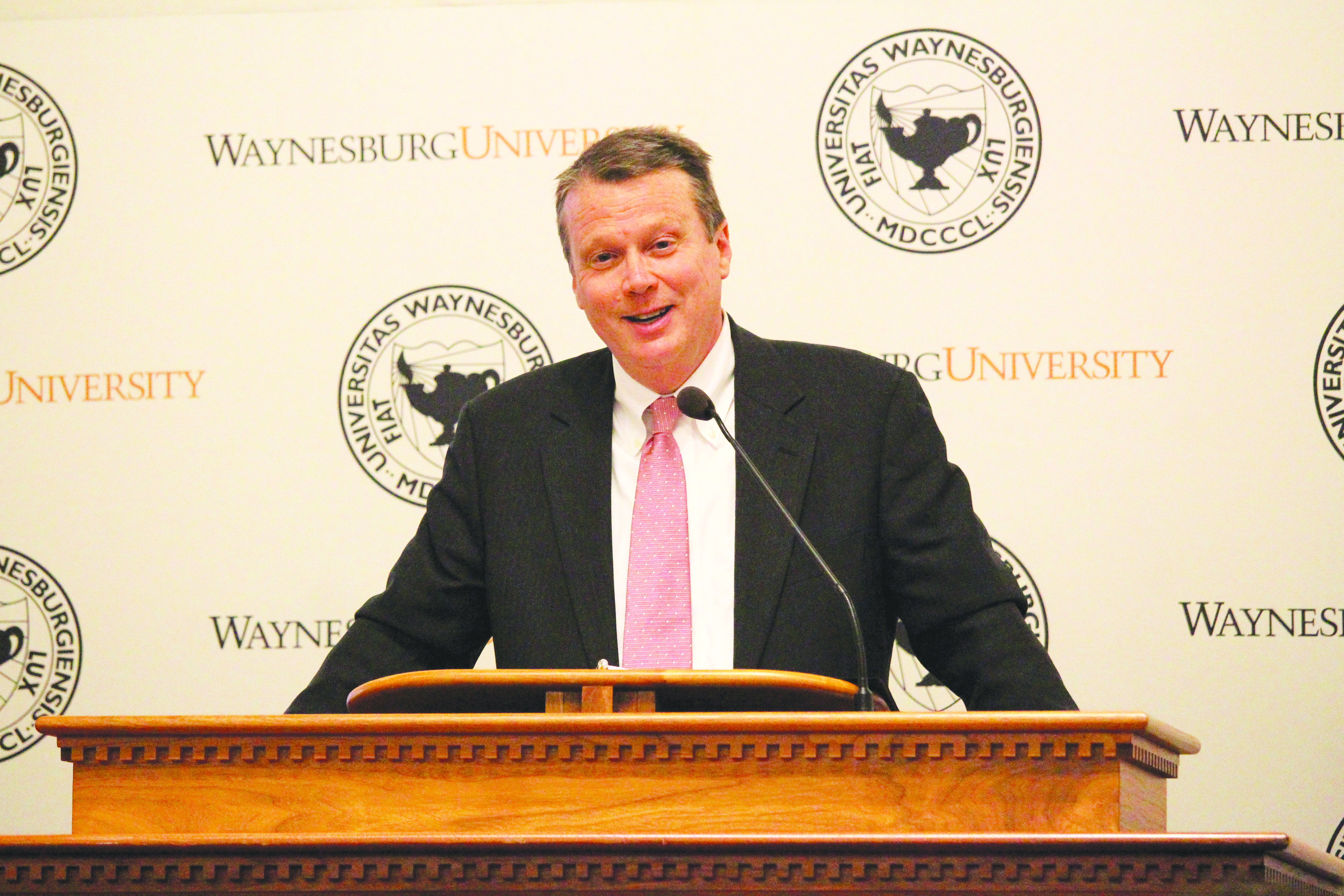
 Mitchell Kendra, Yellow
 Waynesburg University President Douglas Lee held up a packet of paper for the audience and paged through its contents. Marked-up and highlighted paragraphs of information covered the paper.
“This will give you an idea that these are the differences between the House bill and the Senate bill when it comes to higher education,” said Lee.
The Senate approved its tax reform bill with a 51-49 vote Saturday, Dec. 2. The bill now must be reconciled by negotiators from both the House and the Senate before it becomes law. The House had passed its tax reform bill on Nov. 16. The provisions of each bill have the potential to significantly impact higher education in America either positively or negatively. In a news conference Monday, Dec. 4, Lee expressed his desire for the provisions of the Senate bill to be kept.
“My position on that, as one that advocates for higher education and advocates for Waynesburg University, is obviously I want the provisions of the Senate bill accepted over those of the House,” said Lee.
Lee said that the House bill has much more negative impact on higher education if its provisions stand instead of the Senate bill.
“The House bill is going to repeal the tax deduction for interested paid on federal student loans,” said Lee. “The senate bill didn’t change it.”
Another significant provision of the House bill concerns graduate student tuition.
“Tuition that students receive as graduate assistants will be taxed,” said Lee. “The senate bill doesn’t have that provision. So, the old standard would apply – which would be that it’s tax free.”
Lee said that these are just some of the highlights of the differences between the provisions of the Senate and House bills.
“If you’re getting the sense of it,” said Lee, “I’m cheering for the Senate bill right now, hoping that a lot of this goes away.”
One thing that both the Senate and House bills have in common is a tax on endowments for colleges and universities.
“What’s bad about it is it sets a precedent,” said Lee. “This is the first time in history that endowments of private non-profit colleges and universities have been taxed. And if you watch government as I have watched government for the last 40 years, once they are in an area, they never leave – and it only grows bigger and bigger.”
President Lee spoke on whether Waynesburg University is prepared to cope with the potential challenges the final negotiated tax reform bill may pose to higher education.
“I’m already thinking of things in terms of – and we have others thinking about it as well – if A happens what are we going to do, if B happens what are we going to do? But I really think that before you put a lot of time and energy and resources into it, you want to see what the final version of the bill or the new law will be that’s supposed to come out by Christmas,” said Lee.
Lee is working to have his concerns heard.
“I am also on the board of directors of the Association of Independent Colleges and Universities of Pennsylvania,” said Lee. “We work very hard to make sure that our views are heard both in Washington and in Harrisburg on matters that effect our students in higher education.”
Concerned students may be able to impact the decisions of lawmakers by reaching out to their senators and representatives.
“It’s one thing for a university president to reach out,” said Lee, “but when concerned students reach out as well, that’s a larger constituency base and it does have an impact on decision making.”